DXY Elliott Wave: Wave (4) Pullback Before Wave (5) Up
Wave (4) is doing exactly what Wave (4)s are supposed to do. Making you doubt the trend.
Wave (4) is doing exactly what Wave (4)s are supposed to do. Making you doubt the trend.
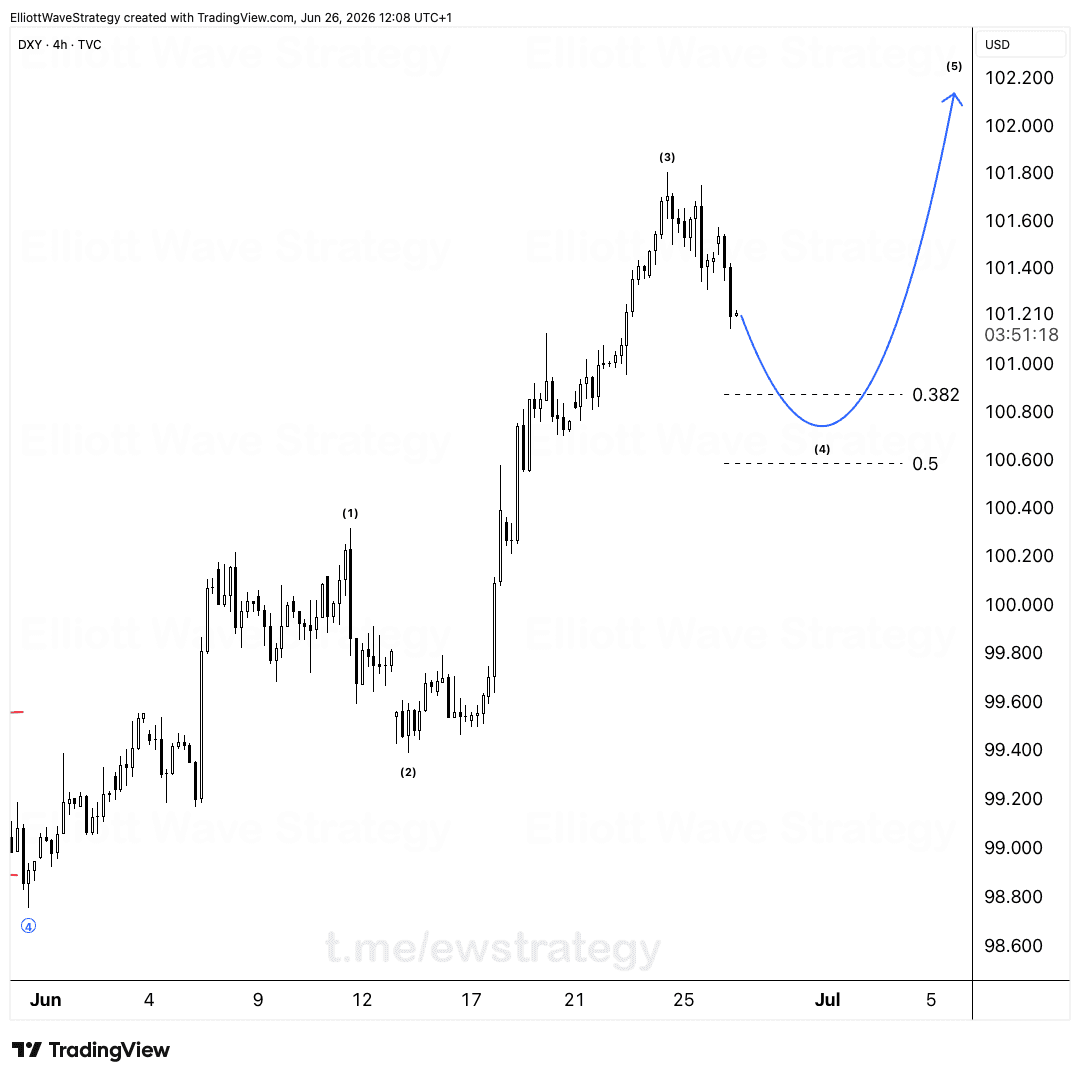
DXY has been climbing in a clean five wave sequence on the 4h chart. Waves (1), (2) and (3) are complete. Wave (3) topped out and the index is now pulling back, and that pullback is landing right where it should: the 0.382 and 0.5 Fibonacci retracement zone.
This is not a reversal. This is the market reloading for Wave (5).
Why is DXY pulling back after Wave (3)?
Every impulse needs a Wave (4) before the final leg up. After Wave (3) peaked above 101.8, DXY dropped sharply, and that drop is corrective, not impulsive. The 0.382 retracement sits near 101.0 and the 0.5 level sits just below it. That whole zone is the natural landing area for Wave (4) inside this structure.
The drop looks sharp on the chart because Wave (3) was steep. Sharp corrections after strong impulse waves are normal. They are not evidence that the trend has flipped.
What happens to traders during Wave (4)?
Most traders see a pullback and panic. They close longs. They flip short. They convince themselves something has changed.
Nothing has changed. The impulse structure is intact. Wave (5) is next.
This is the exact moment Wave (4)s are designed to shake out weak hands. The structure hasn't broken, the wave count hasn't been invalidated, but the price action feels uncomfortable enough that people abandon the trend right before it resumes.
How does this DXY count affect EURUSD, GBPUSD, USDCHF and USDCAD?
Pairs ending in USD, like EURUSD and GBPUSD, are getting a short-term bounce while DXY corrects. Pairs starting with USD, like USDCHF and USDCAD, are dipping for the same reason.
These are not new trends. They are corrections inside the larger structure. Corrections are where the next opportunity sets up, not where the story ends.
What confirms Wave (5) is starting?
The patient trader does not chase the noise. He maps the levels, watches for Wave (4) to complete inside the 0.382 to 0.5 Fib zone, and waits for Wave (5) to confirm with a turn back to the upside.
That confirmation is worth waiting for.
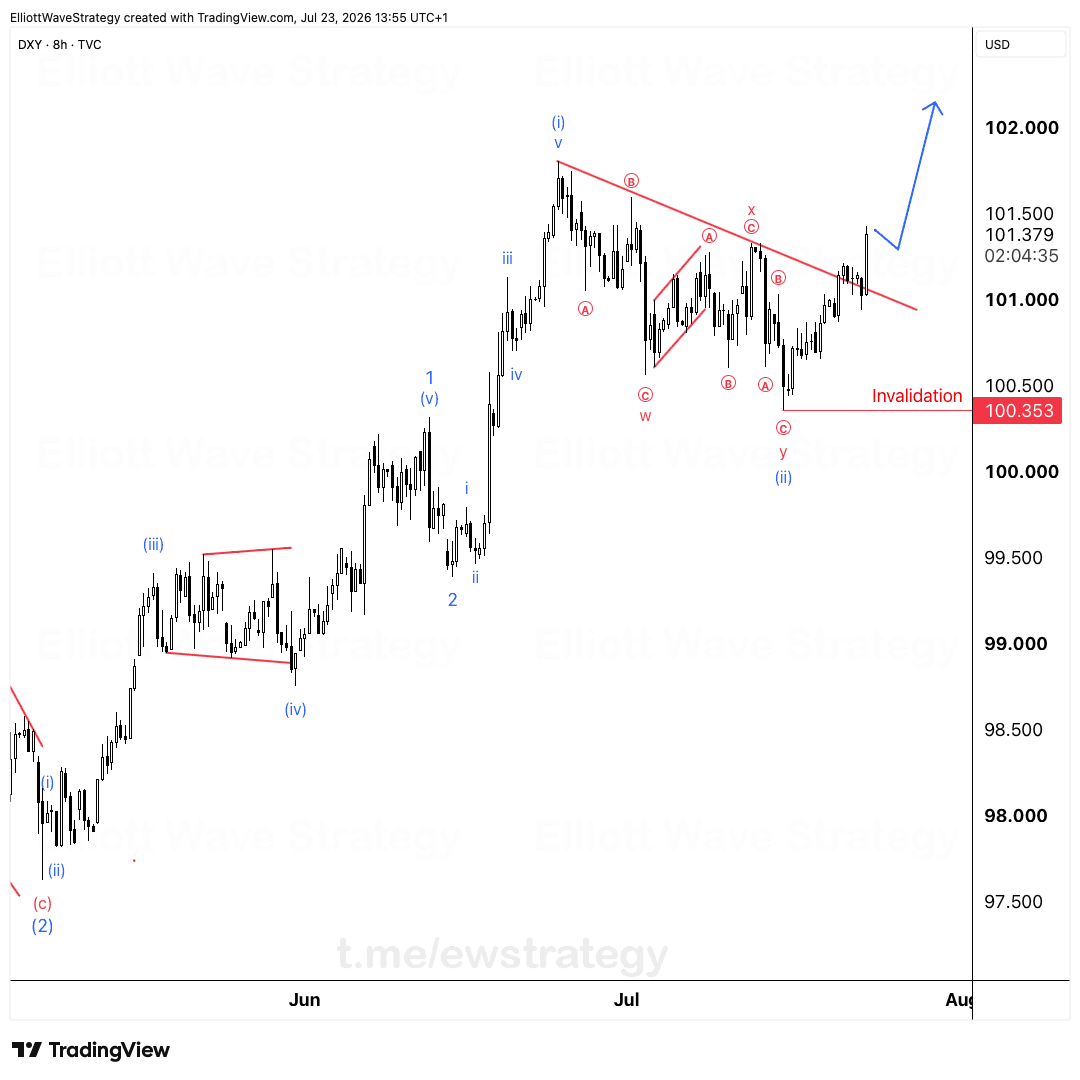
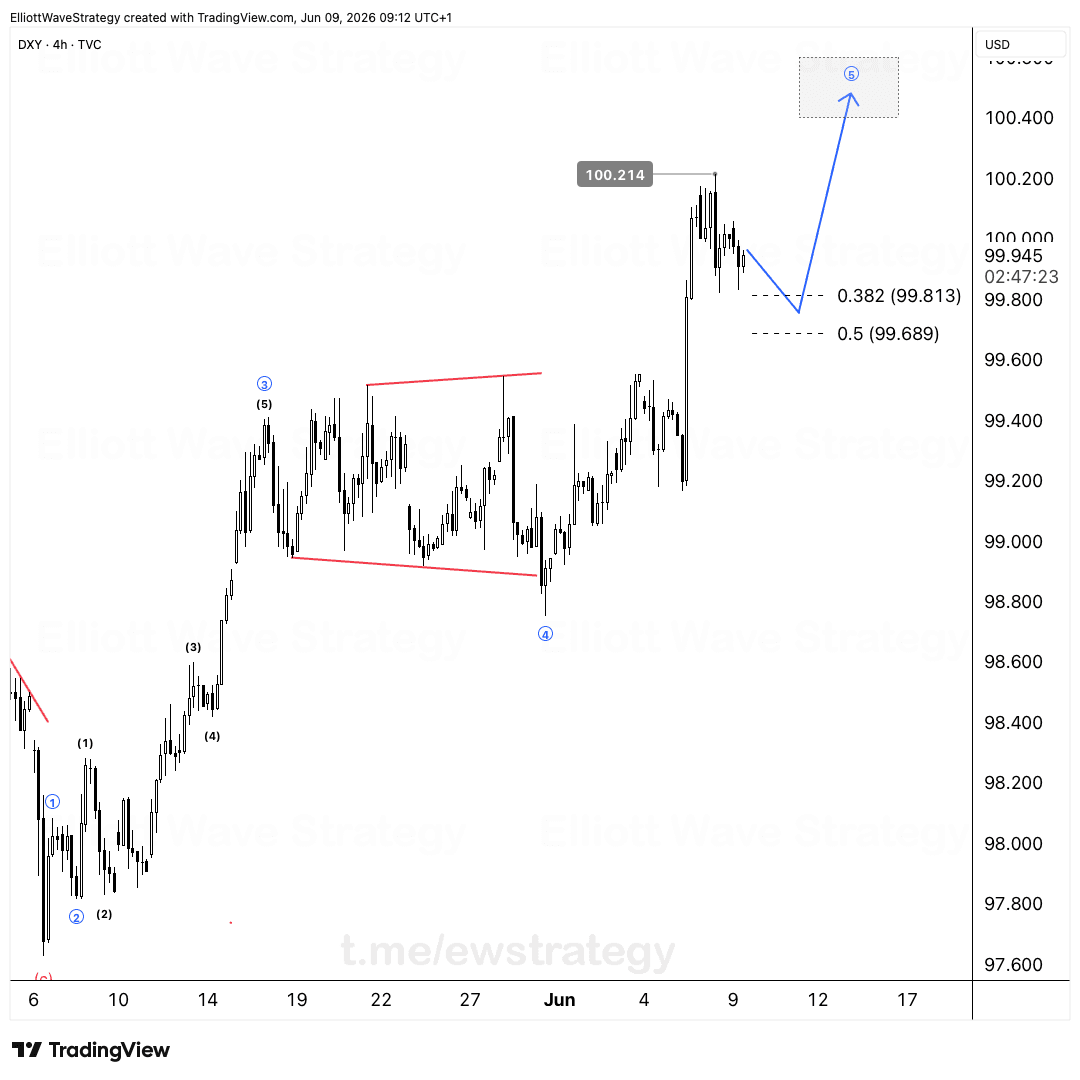
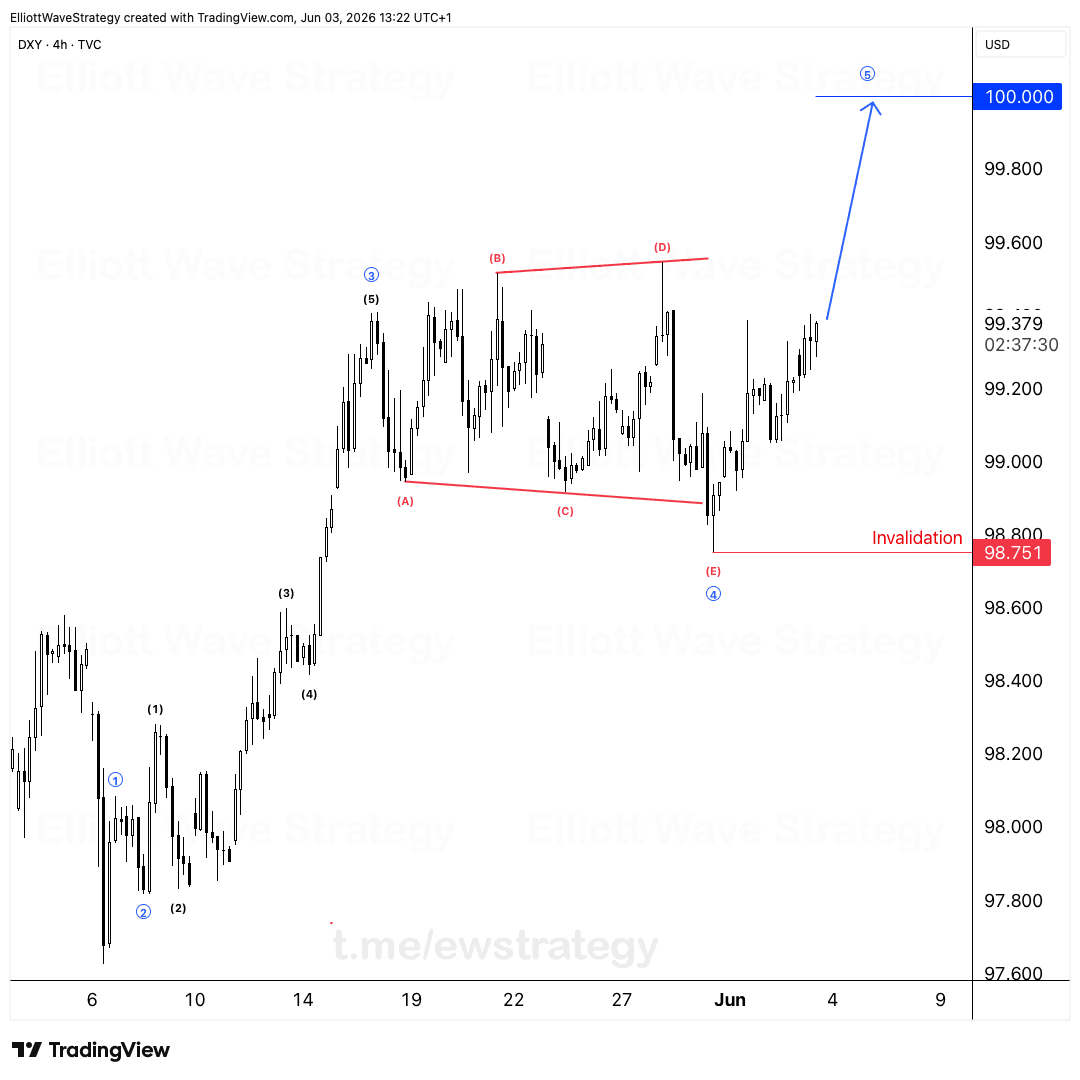
DXY's structure since early June shows five clean waves building. As long as Wave (4) holds inside its corrective zone and doesn't overlap into Wave (1) territory, the count toward Wave (5) stays valid. The reaction across EURUSD, GBPUSD, USDCHF and USDCAD will follow whatever DXY does next.
Key Takeaways
- •DXY completed Waves (1), (2) and (3) and is now correcting inside Wave (4).
- •The 0.382 and 0.5 Fibonacci retracement levels mark the expected landing zone for DXY's Wave (4).
- •The DXY pullback is corrective, not a trend reversal, with Wave (5) expected to follow.
- •EURUSD and GBPUSD bounces, along with USDCHF and USDCAD dips, are corrections tied to the DXY Wave (4) pullback.
- •Confirmation of Wave (4) completing inside its Fib zone is what traders should watch for before Wave (5) develops on DXY.
Frequently Asked Questions
What does Wave (4) mean for DXY right now?
It means DXY is in a corrective pullback after completing Wave (3), retracing into the 0.382 to 0.5 Fibonacci zone before a potential Wave (5) advance.
Does the DXY pullback mean the uptrend is over?
No. The Elliott Wave count treats this as a normal Wave (4) correction within an intact five wave impulse, not a reversal of the broader trend.
How does DXY's Wave (4) affect EURUSD and USDCHF?
As DXY corrects lower, USD-quoted pairs like EURUSD and GBPUSD get a short-term bounce, while USD-based pairs like USDCHF and USDCAD dip, both as temporary countertrend moves.
Disclaimer: This analysis is for educational purposes only and does not constitute financial advice. Elliott Wave analysis involves subjective interpretation. Always do your own research and manage your risk accordingly.
Get Full Coverage for All 27 Instruments
Premium members receive daily wave counts with entry zones, targets and invalidation levels, published daily across all 27 instruments.
View Premium Plans