BTCUSDT Elliott Wave: Two Fib Rejections Confirm Bears
The structure is speaking clearly. We just need to listen.
The structure is speaking clearly. We just need to listen.
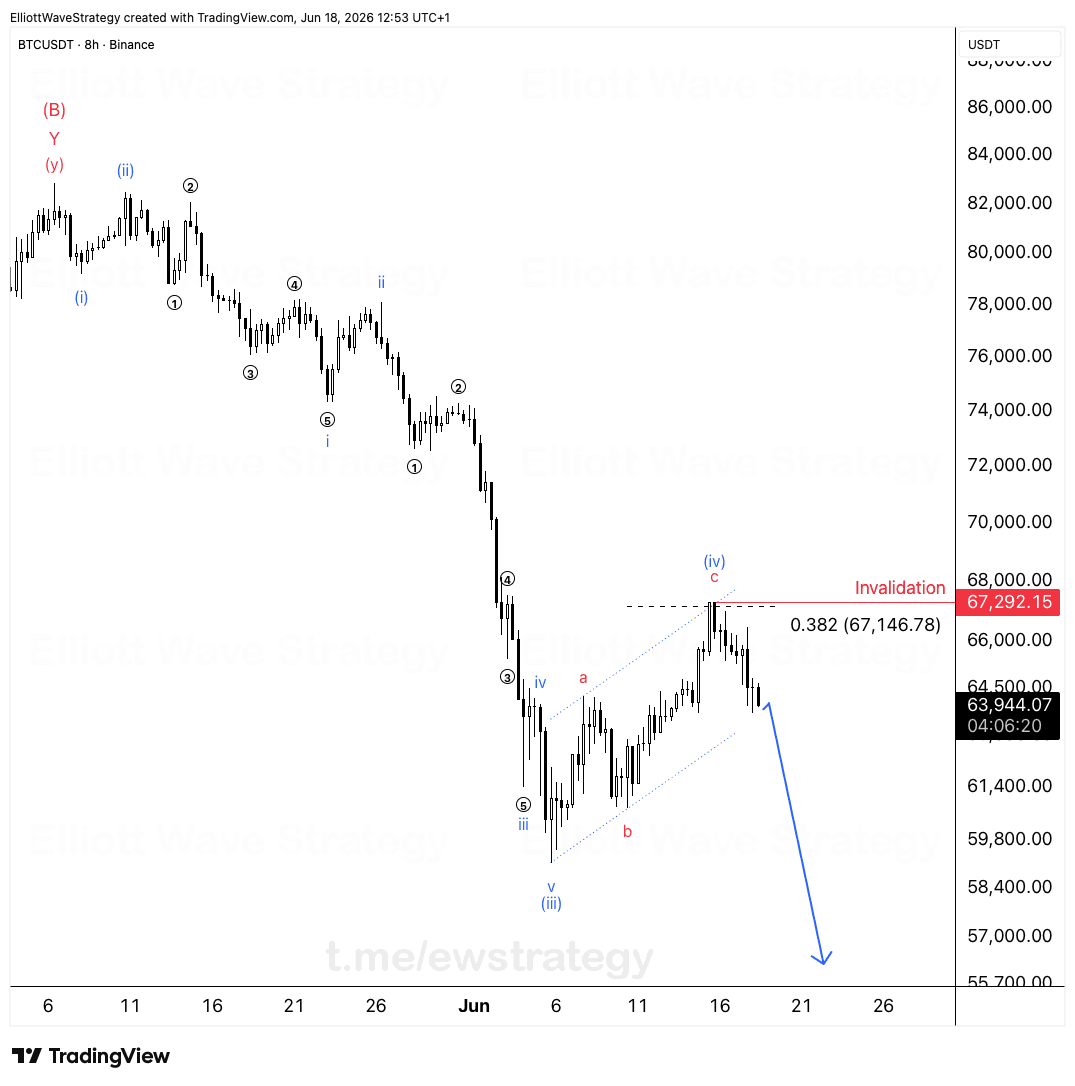
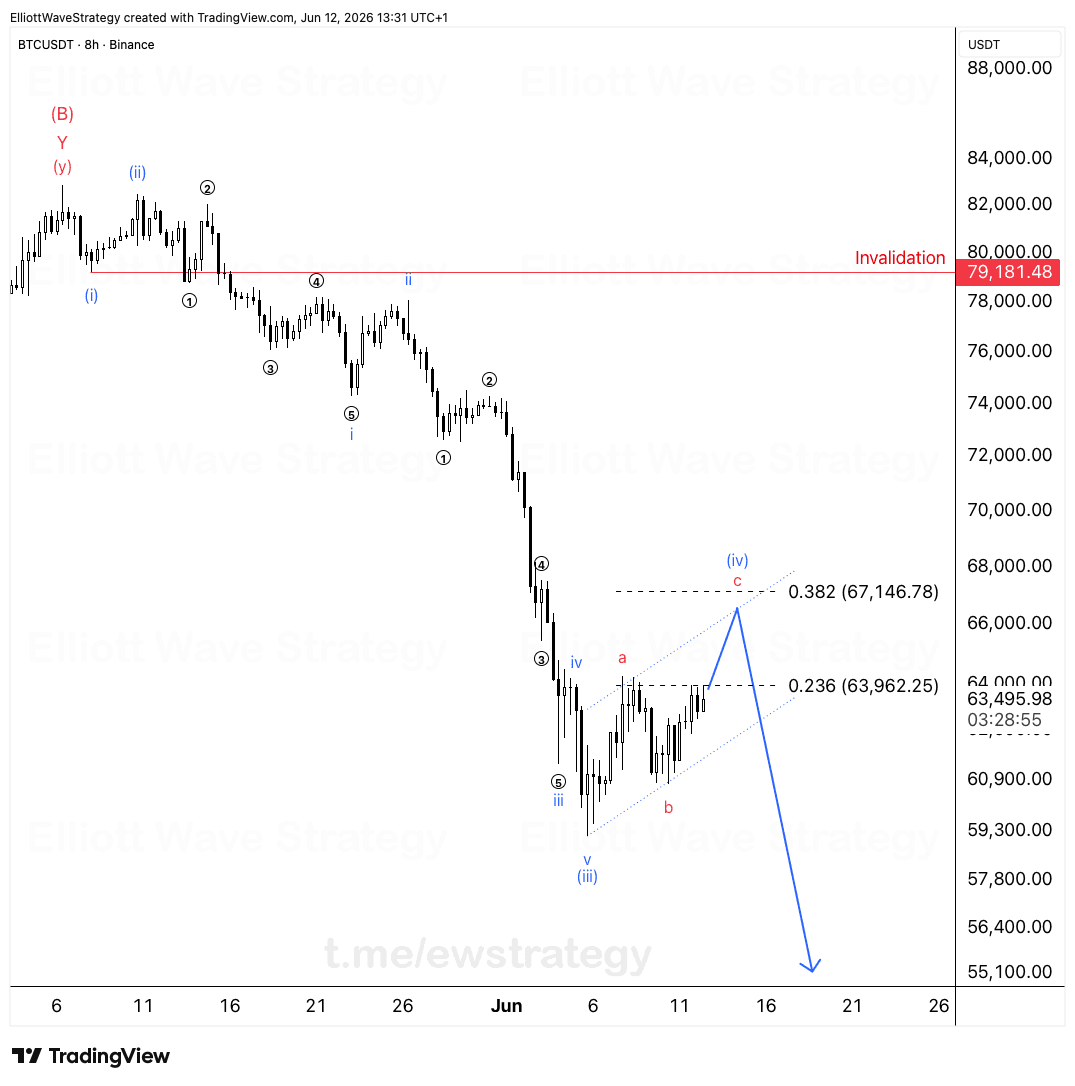
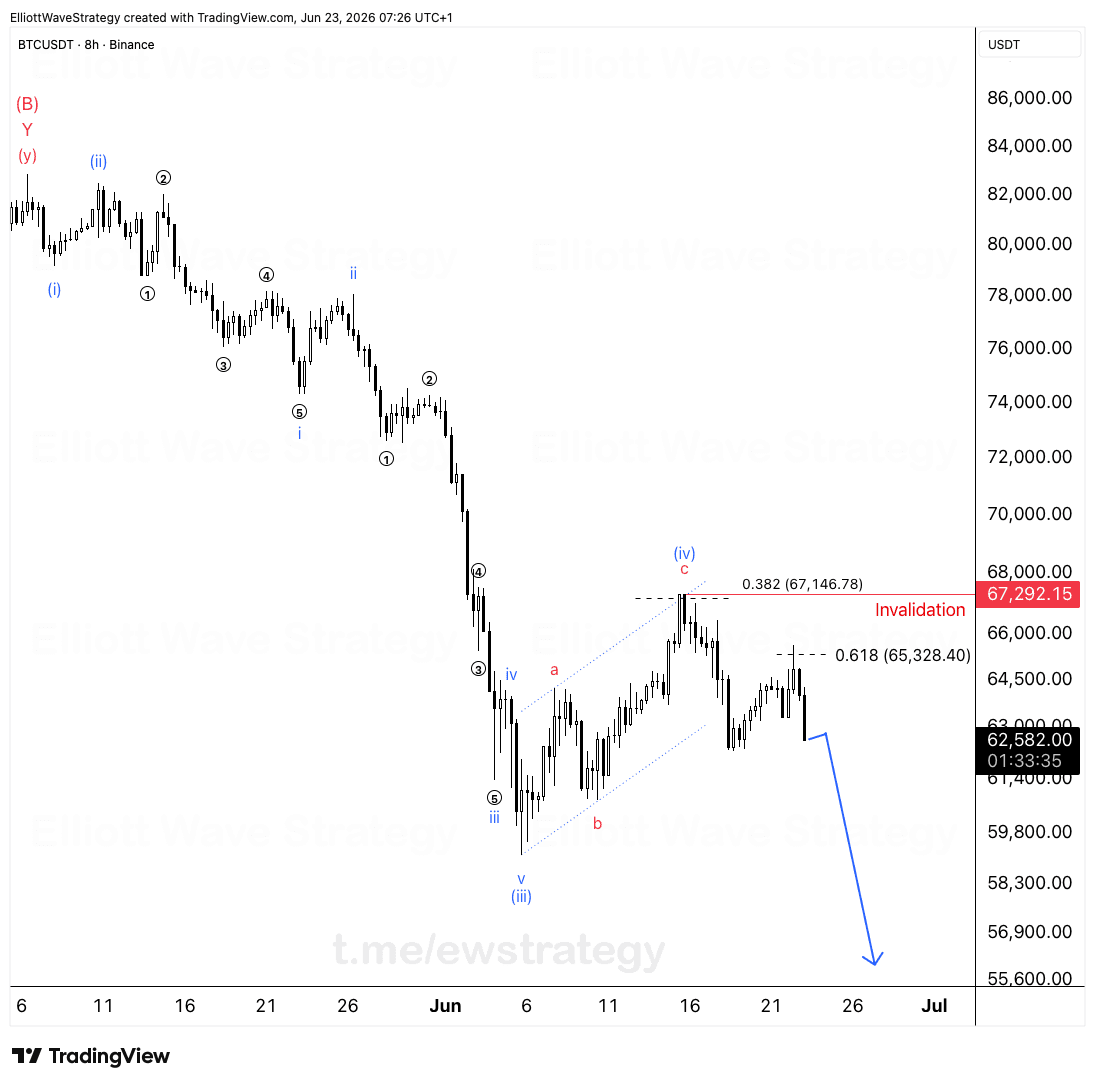
BTCUSDT finished Wave (iii) at the lows, and everything since then has been corrective. Price bounced, pushed into the 0.382 retracement at $67,146.78, and got rejected. It pulled back, touched the 0.618 at $65,328.40, and reversed again.
Two Fibonacci levels. Two rejections. Both precise.
That is not noise. That is a market respecting math.
Why does Wave (iv) matter for BTCUSDT right now
The chart labels this bounce as Wave (iv), a corrective structure that formed after the five waves down into Wave (iii). Inside it, the sub-waves i through v built a small zigzag between the 0.382 and 0.618 retracement levels, with a and b legs stretching the correction just long enough to get traders leaning long.
The rejection at $67,146.78 is marked directly on the chart as the invalidation zone. As long as price stays below $67,292.15, the bearish structure from the highs remains intact. That is the level the whole count leans on right now.
What does this Wave 2 style bounce tell traders
This is exactly how corrective bounces behave inside a bearish Elliott Wave structure. They test patience, grind higher, and make you feel like the trend has changed.
It hasn't. The rejection at the 0.618 confirms the corrective bounce is done doing its job. Wave (iv) completing here opens the door for the next impulsive leg down, mirroring the earlier move from wave (3) into wave (5) on the left side of the chart.
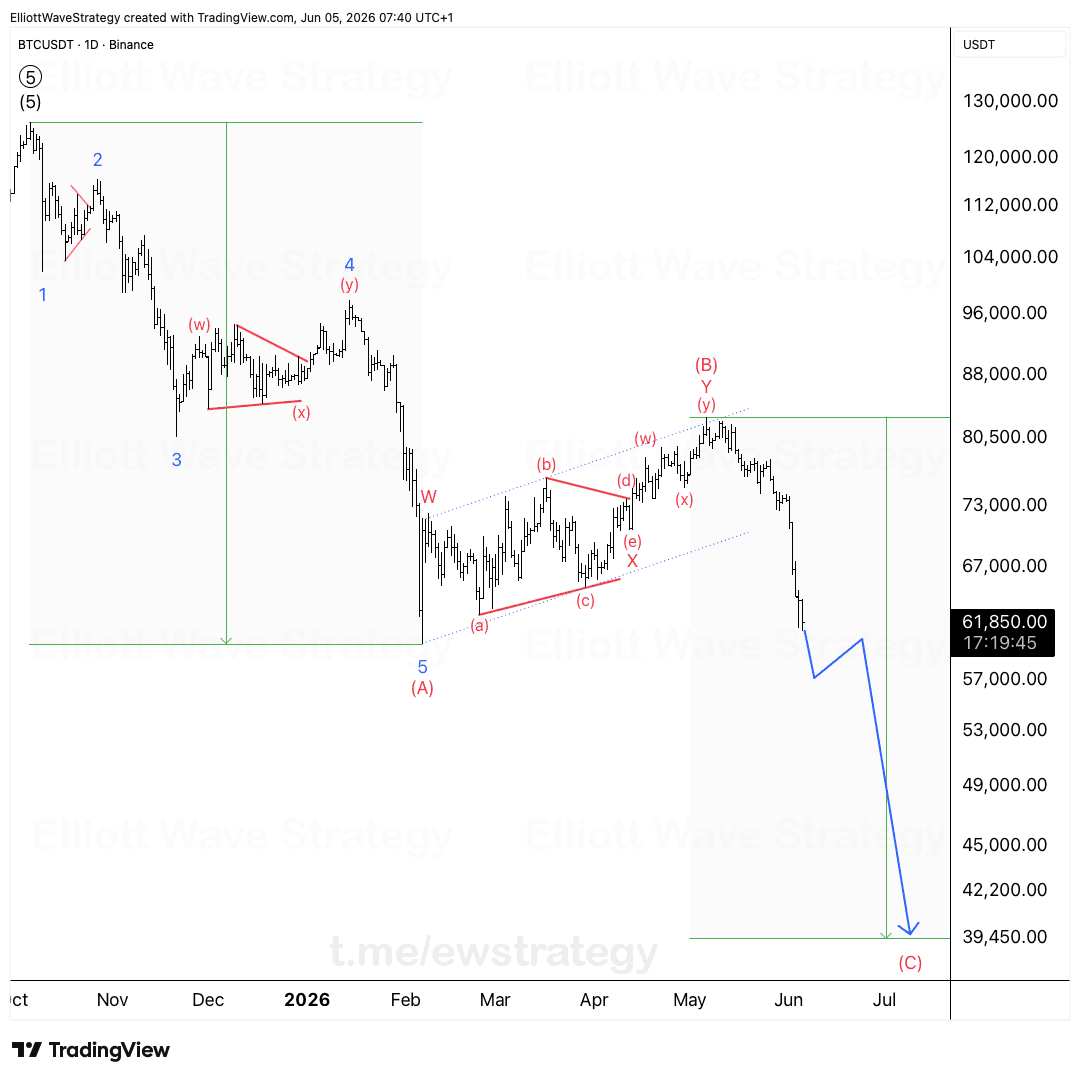
The drawn projection on the chart points toward the 55,600 to 56,900 region, extending the bearish structure that has been in place since the (B) wave peak.
How reliable are these Fibonacci rejection levels
Two clean Fibonacci reactions in the same corrective structure is not a coincidence traders should ignore. The 0.382 and 0.618 levels are the two most watched retracements in Elliott Wave analysis, and BTCUSDT respected both within a tight range.
That kind of precision is what separates a structure worth tracking from random price action. It also means the invalidation level is not arbitrary. It sits exactly where the corrective count says it should.
Map the structure. Respect the levels. Trust the count.
BTCUSDT is not out of its bearish phase until $67,292.15 gets taken out with conviction. Until then, the path of least resistance according to this Elliott Wave count points lower.
Key Takeaways
- •BTCUSDT rejected twice at Fibonacci levels: the 0.382 at $67,146.78 and the 0.618 at $65,328.40.
- •The bearish Elliott Wave structure from the highs remains intact while BTCUSDT trades below $67,292.15.
- •Wave (iv) on BTCUSDT formed as a corrective zigzag with sub-waves i through v between the two Fibonacci levels.
- •The chart's drawn projection targets the 55,600 to 56,900 region for the next impulsive leg on BTCUSDT.
- •Two precise Fibonacci rejections in the same correction reinforce the reliability of this BTCUSDT Elliott Wave count.
Frequently Asked Questions
What invalidates the bearish BTCUSDT Elliott Wave count?
A sustained move above $67,292.15, the invalidation level marked on the chart, would undermine the current bearish structure and require a reassessment of the wave count.
Why did BTCUSDT reverse at the 0.618 retracement?
The 0.618 at $65,328.40 lines up with the end of the corrective Wave (iv) structure, and rejections at this level are typical when a correction has run its course inside an Elliott Wave count.
What comes after Wave (iv) in this BTCUSDT count?
If the corrective bounce is complete, the next expected move is an impulsive decline, with the chart's drawn trajectory pointing toward the 55,600 to 56,900 area.
Disclaimer: This analysis is for educational purposes only and does not constitute financial advice. Elliott Wave analysis involves subjective interpretation. Always do your own research and manage your risk accordingly.
Get Full Coverage for All 27 Instruments
Premium members receive daily wave counts with entry zones, targets and invalidation levels, published daily across all 27 instruments.
View Premium Plans